If you are looking for an authentic Moroccan cultural experience away from the country’s busiest tourist routes, the Taliouine Saffron Festival is worth adding to your itinerary. Held around the saffron harvest in the small town of Taliouine in southern Morocco, the festival celebrates one of the region’s most important agricultural products, known locally as “red gold.” The exact festival dates can vary from year to year, so travelers should confirm the dates before planning their trip. Morocco’s official tourism office lists saffron in Taliouine among the country’s notable agricultural festivals and places the celebration in November.
This guide explains when to visit, what to expect, how saffron is harvested, how to reach Taliouine, what to see nearby, what to buy, and how to combine the festival with a wider Morocco itinerary. You will also find practical advice on accommodation, transport, weather, photography, food, and planning a trip through the Anti-Atlas and southern Morocco.
What Is the Taliouine Saffron Festival?
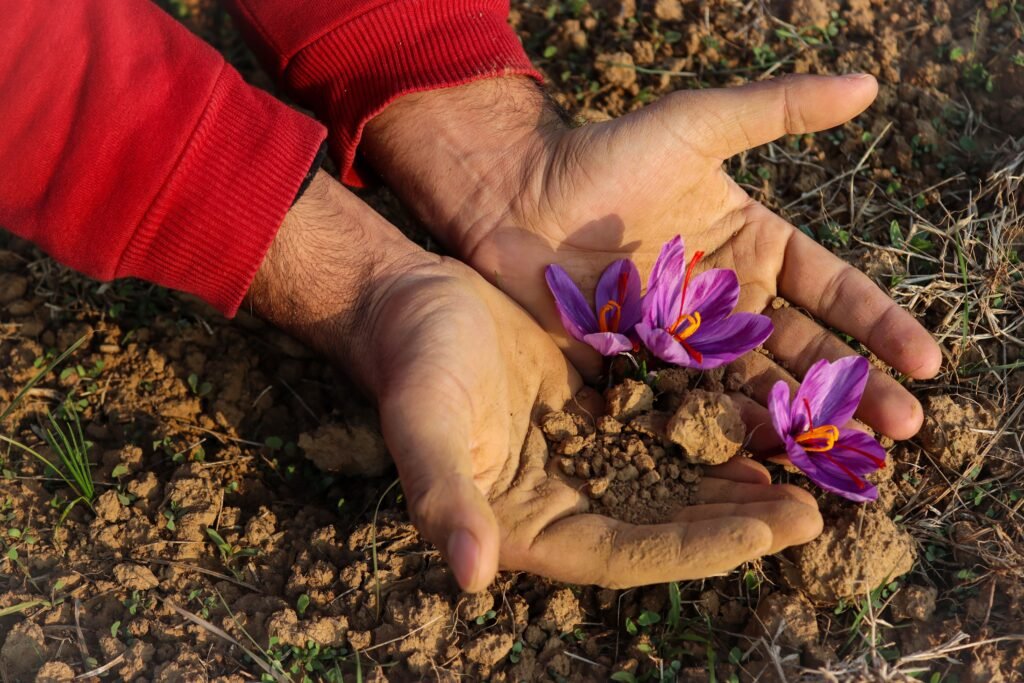
The Taliouine Saffron Festival is a local agricultural and cultural celebration dedicated to saffron production in and around Taliouine, in Morocco’s Souss-Massa region. The event developed alongside the region’s saffron-growing cooperatives and is connected to the annual harvest, when saffron crocus flowers are carefully collected and processed.
The festival is more than a food event. It provides an opportunity to discover the agricultural traditions of rural Morocco, meet local producers, learn about saffron cultivation, see regional handicrafts, and experience local music and cultural performances.
Historically, the festival has been associated with the autumn harvest period. Sources place it around late October or early November, while Morocco’s national tourism material identifies saffron in Taliouine as a November festival. Because the harvest depends on seasonal conditions, the exact dates should not be assumed far in advance.
For travelers, this uncertainty is important: plan for the harvest season, but confirm the official dates before booking non-refundable travel specifically for the festival.
Why Is Taliouine Famous for Saffron?
Taliouine has become closely associated with Moroccan saffron because the surrounding area provides suitable conditions for growing Crocus sativus, the plant from which saffron is obtained.
Morocco’s National Tourist Office describes saffron from the Taliouine region as one of the country’s distinctive local products and highlights its reputation as “red gold.”
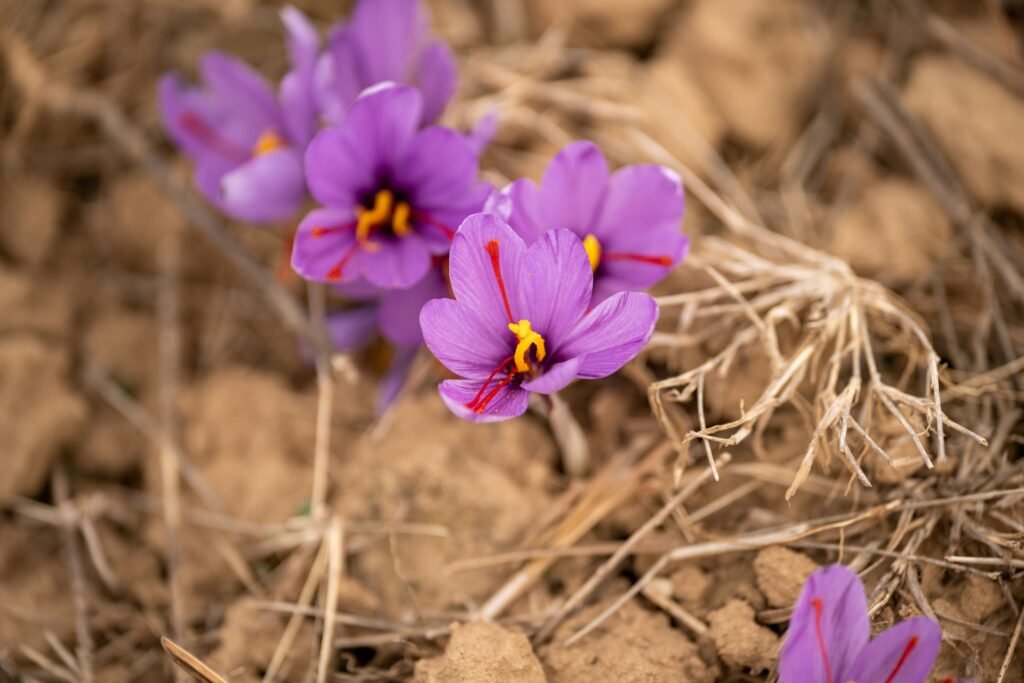
The spice itself is unusual because only the red stigmas of the flower are used. Each flower produces only a few delicate threads, and the work involved in harvesting and preparing them is largely manual.
How Is Saffron Harvested?
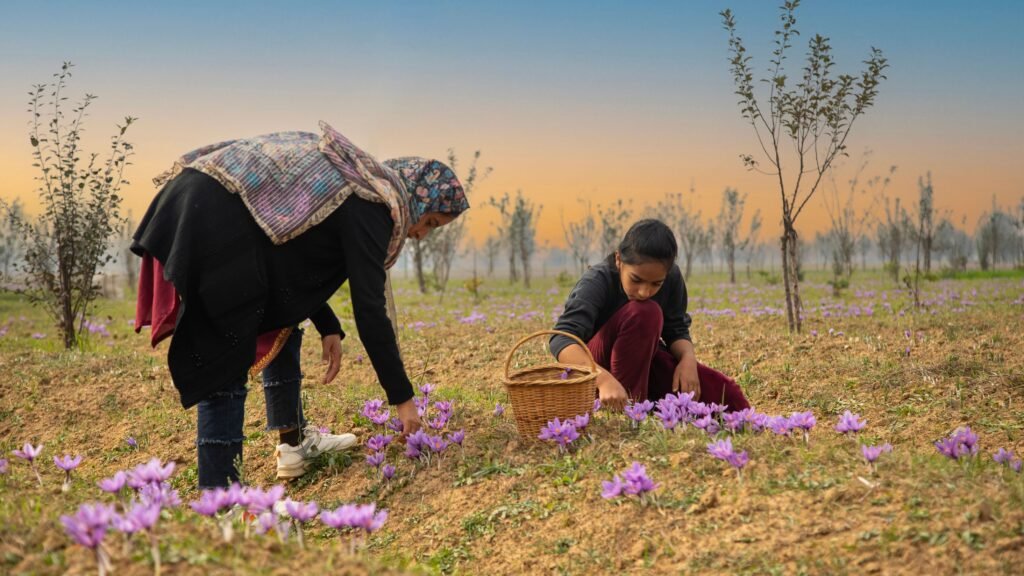
The saffron harvest is a fascinating part of visiting the region.
The purple crocus flowers appear during the cooler autumn period. Harvesting needs to be done carefully and at the right time because the flowers are delicate. Once collected, the flowers are opened and the red stigmas are separated before being dried.
This helps explain why genuine saffron is expensive. A small quantity represents a considerable amount of agricultural and manual work.
If you visit during the harvest, you may have the opportunity to learn directly from local producers or visit a cooperative. Experiences vary depending on the season, local arrangements, and access, so it is better to ask your guide or accommodation about current opportunities rather than expecting every field to be open to visitors.
When Is the Taliouine Saffron Festival?
The festival is generally associated with late October or early November, although published calendars are not always consistent and dates can change. Some sources describe it as a late-October event, while others place it in early November.
For 2026, travelers should be especially careful about relying on an old festival date. Current event listings indicate that a confirmed 2026 edition date may not yet be available, while some tourism calendars place the festival broadly in October or November.
Best Strategy for Planning Your Visit
If the festival is the main reason for your trip, use this approach:
- Look for the official festival announcement before booking.
- Allow flexibility around late October and early November.
- Confirm dates with your local tour operator or accommodation.
- Consider staying in the area for more than one night.
- Build your itinerary around the wider Anti-Atlas region rather than traveling only for a single event.
This last point is particularly useful because Taliouine is located in an interesting part of southern Morocco. Even if festival schedules change, the surrounding landscapes, villages, valleys, and saffron-producing communities make the journey worthwhile.
What Can You Do at the Saffron Festival?
The exact program varies, but the festival traditionally combines agricultural activities with cultural events and opportunities to discover local products.
1. Learn About Moroccan Saffron
One of the main reasons to attend is to understand what makes Taliouine saffron special. Local producers and cooperatives can explain how saffron is planted, harvested, dried, packaged, and sold.
This is much more informative than simply buying a small jar in a tourist market.
2. Visit Saffron Cooperatives
Saffron cooperatives play an important role in the local economy. Visiting a cooperative can give travelers a better understanding of how small-scale producers market their harvest.
If you want to buy saffron, a cooperative or established local producer is generally a better place to start than an anonymous roadside seller.
3. Taste Saffron-Based Food
Saffron is used in Moroccan cooking in relatively small quantities, where its aroma and color can add depth to dishes.
Depending on the festival program, visitors may find local dishes, tea, pastries, or other preparations incorporating saffron. Food demonstrations and tastings can also be part of the cultural experience.
4. Enjoy Local Music and Cultural Performances
The festival has historically included cultural activities alongside the agricultural exhibition, including music, dancing, crafts, and other community events. Research on the festival describes it as combining a trade exhibition with cultural activities such as craft exhibitions, concerts, and dance performances.
For travelers interested in Moroccan culture, these performances provide a different experience from the entertainment found in major tourist cities.
5. Shop for Local Products
Saffron is naturally the star product, but the festival can also be a good opportunity to look for other regional products and handicrafts.
When buying saffron, ask about:
- The production area.
- Harvest season.
- Packaging date.
- How the saffron was dried.
- Whether the seller is a producer or cooperative.
- Recommended storage conditions.
Avoid buying unusually large quantities simply because the price looks attractive. Quality matters more than volume.
How to Recognize Good Moroccan Saffron
Saffron is one of the products most vulnerable to adulteration, so travelers should be cautious when shopping.
Authentic saffron consists of recognizable red stigmas rather than a brightly colored powder. Whole threads make it easier to inspect what you are buying.
Good-quality saffron should have a distinctive aroma and should be sold in clean, properly labeled packaging when purchased through a cooperative or established producer.
Should You Buy Saffron in Taliouine?
Yes, especially if you are interested in supporting local producers and taking home a small culinary souvenir.
Buy modest quantities and keep the packaging and receipt if provided. At home, store saffron in an airtight container away from heat, moisture, and direct sunlight.
A small amount goes a long way in cooking, so you do not need to purchase a large package.
Where Is Taliouine?
Taliouine is located in southern Morocco, in the Souss-Massa region, between the High Atlas and Anti-Atlas landscapes. It is positioned along the route between the Taroudant area and the wider Ouarzazate region.
Its location makes it particularly interesting for travelers who want to explore southern Morocco beyond the standard Marrakech–Sahara route.
The town itself is relatively small, which is part of its appeal. Do not expect the scale of tourist infrastructure found in Marrakech, Agadir, or Ouarzazate.
Instead, the experience is more rural and closely connected to agriculture and local communities.
How to Get to Taliouine
From Marrakech
Traveling from Marrakech to Taliouine requires a substantial road journey, so it is best incorporated into a longer southern Morocco itinerary rather than treated as a quick day trip.
A private vehicle with a driver is one of the most comfortable options because you can stop along the route and adjust the schedule according to the festival program.
Travelers starting in Marrakech can explore the available Marrakech tour options and request an itinerary that incorporates Taliouine when festival dates are confirmed.
If your trip also includes the Sahara, a longer itinerary makes much more sense than rushing to Taliouine and immediately returning to Marrakech.
For example, Morocco Best Tour offers a 3 Days From Marrakech desert tour that travels toward the southern desert regions. A private itinerary can potentially be adapted to include additional cultural stops depending on your available time.
From Ouarzazate
Ouarzazate is another useful base for exploring southern Morocco.
The city is well connected to destinations such as the Draa Valley, Ait Benhaddou, the Dades and Todra areas, and the Sahara. Taliouine can therefore work as part of a broader road trip through southern Morocco.
Morocco Best Tour also offers a 4 Days From Ouarzazate tour covering destinations toward Zagora and Merzouga, with private transport, a desert camp, camel trekking, and hotel stays.
A private itinerary can be especially useful if your priorities include saffron, local villages, scenic drives, and photography rather than simply checking major tourist attractions off a list.
Can You Visit Taliouine on a Day Trip?
Technically, it may be possible from some southern destinations, but it is not the option I would recommend if the festival is your main objective.
Festival visits are more enjoyable when you have time to arrive without rushing, explore the local area, attend activities, speak with producers, and continue your journey the following day.
Taliouine is better treated as a stop on a southern Morocco road trip.
If you are starting from Marrakech, consider spending several days traveling through the High Atlas and southern valleys rather than trying to fit everything into one exhausting day.
What Else Can You See Near Taliouine?
The wider region is one of the strongest reasons to visit during saffron season.
Anti-Atlas Landscapes
The Anti-Atlas offers a quieter alternative to Morocco’s more heavily visited mountain destinations. Expect dry valleys, rocky slopes, small settlements, agricultural landscapes, and dramatic changes in scenery.
The region is particularly attractive in autumn when temperatures are more comfortable for road travel and outdoor exploration.
Taroudant
Taroudant is a historic walled city in the Souss Valley and can work well as part of an itinerary before or after Taliouine.
Its medina, traditional souks, ramparts, and more relaxed atmosphere make it a useful contrast to Marrakech.
Ouarzazate
Ouarzazate is a practical stop for travelers continuing toward the desert. The city provides access to the Draa Valley and other famous southern attractions.
Morocco Best Tour’s Ouarzazate tour collection can be useful if you want to combine the saffron region with desert and kasbah experiences.
The Draa Valley
The Draa Valley is known for palm groves, kasbahs, villages, and long desert landscapes. It is one of the most rewarding areas to explore by road.
Morocco Best Tour’s Ouarzazate itineraries include routes through the Draa Valley, making it possible to connect agricultural, cultural, and desert experiences in one journey.
What Is the Weather Like During the Festival?
Late October and November are generally much more comfortable for traveling through southern Morocco than the peak summer months.
However, Taliouine is not the Sahara. Temperatures can change considerably between daytime and nighttime, particularly in mountainous and elevated areas.
Pack layers rather than relying only on warm-weather clothing.
What to Pack
For a festival visit, bring:
- Comfortable walking shoes.
- Light layers for daytime.
- A warm fleece or jacket for evenings.
- Sun protection.
- Sunglasses and a hat.
- A reusable water bottle.
- A small daypack.
- Camera or phone with spare battery power.
- Cash in Moroccan dirhams for small purchases.
- Space in your luggage for local products.
If your itinerary continues toward the Sahara, pack additional warm clothing because desert nights can feel surprisingly cold outside the summer season.
Where Should You Stay?
Accommodation in Taliouine is more limited than in major Moroccan tourist centers. That is another reason to plan ahead if your trip coincides with the festival.
Depending on availability, travelers may choose between local hotels, guesthouses, rural accommodation, or staying in another town along their route.
For festival dates, reserve early enough to avoid having to make a long drive immediately after attending evening activities.
If you are traveling privately, ask your tour operator to coordinate accommodation with the festival schedule. This can also make it easier to include visits to local producers without wasting time on unnecessary detours.
Travel Tips for a Better Festival Experience
Confirm the Dates
This is the most important tip. The festival is associated with the saffron harvest, and published dates can differ. Current listings for 2026 do not provide a definitive date, so verify before finalizing your itinerary.
Bring Cash
Small rural events may not have reliable card-payment facilities. Carry Moroccan dirhams for food, drinks, crafts, and saffron purchases.
Ask Before Photographing People
Moroccan hospitality is warm, but you should still ask permission before taking close-up portraits of farmers, vendors, artisans, or children.
Travel Slowly
The journey to Taliouine is part of the experience. Allow time for viewpoints, villages, tea stops, markets, and unexpected roadside discoveries.
Support Local Producers
Buying directly from reputable cooperatives or producers can make your visit more meaningful while helping local agricultural communities.
Do Not Expect a Large International Festival
Taliouine is a small town. The festival is best approached as a local cultural and agricultural event rather than as a huge international music festival.
That is precisely what makes it interesting for travelers who want a more grounded Moroccan experience.
Is the Taliouine Saffron Festival Worth Visiting?
For travelers interested in food, agriculture, photography, rural culture, and less-touristy destinations, the answer is yes.
The festival gives you a reason to travel into a part of Morocco that many visitors overlook. More importantly, it connects the landscape with the people who cultivate it.
Instead of seeing saffron simply as an expensive spice in a Marrakech market, you can understand where it comes from, why it requires so much manual work, and how important the crop is to communities around Taliouine.
The experience is even more rewarding when combined with a wider southern Morocco itinerary covering mountain landscapes, kasbahs, valleys, and the Sahara.
Frequently Asked Questions
What month is the Taliouine Saffron Festival?
The festival is generally associated with late October or early November, while Morocco’s official tourism material identifies Taliouine’s saffron festival as a November event. Exact dates can vary and should be confirmed before travel.
Where is the Taliouine Saffron Festival held?
The festival is held in Taliouine, a small town in Morocco’s Souss-Massa region, in the saffron-producing area of southern Morocco.
Why is Taliouine famous?
Taliouine is particularly famous for saffron production. The Moroccan National Tourist Office highlights saffron from the Taliouine region as one of Morocco’s notable local products.
Can tourists visit saffron farms?
Opportunities can exist during the harvest period, but access varies by producer and season. The best approach is to arrange a visit through a local guide, cooperative, or trusted tour operator.
Is Taliouine worth visiting outside the festival?
Yes. The surrounding Anti-Atlas landscapes, rural communities, agricultural traditions, and southern Morocco road-trip routes make the area interesting outside the festival period.
How long should I stay in Taliouine?
One night can work for travelers passing through, but two nights give you more flexibility to attend festival activities, visit producers, explore the surroundings, and avoid rushing.
Can I combine the festival with a Sahara desert tour?
Absolutely. This is one of the best ways to make the journey worthwhile. Taliouine can be incorporated into a longer southern Morocco itinerary connecting destinations such as Ouarzazate, the Draa Valley, and the Sahara.
What should I buy at the festival?
Saffron is the obvious souvenir, but look for properly packaged products from reputable cooperatives or producers. You can also explore regional handicrafts and food products depending on the festival program.
The Taliouine Saffron Festival offers travelers a rare chance to experience Moroccan culture through agriculture, local food, saffron cooperatives, music, and rural traditions in the heart of southern Morocco. Because festival dates can change, confirm the schedule before booking and consider combining your visit with the Anti-Atlas, Ouarzazate, Draa Valley, and Sahara. For a private itinerary built around the saffron harvest and the destinations you want to explore, contact Morocco Best Tour and let our local team help you plan the journey.