Planning a trip to Morocco is exciting, but one of the first questions most travelers ask is: how much money do I need for Morocco?
The answer depends on your travel style, the cities you visit, the time of year, your accommodation choices, and how many guided experiences you include. Morocco can be surprisingly affordable for travelers who use local restaurants, public transport, simple riads, and free sightseeing. At the same time, private desert tours, luxury riads, premium restaurants, and private drivers can quickly increase the total.
For a realistic Morocco travel budget in 2026, a backpacker can generally plan around €30–€50 per person per day, while a comfortable mid-range traveler may spend around €60–€120 per day. Travelers looking for private tours, upscale accommodation, and premium experiences should expect €150 or more per day.
These figures are planning ranges rather than fixed prices. Marrakech during a busy period, for example, can cost considerably more than a quieter town. A private Sahara adventure will also have a very different price structure from traveling between cities by bus.
The good news is that Morocco gives you a lot of control over your spending. You can save money on accommodation and food while choosing to spend more on the experiences that matter most, such as a Sahara Desert trip, a guided medina visit, or a day in the Atlas Mountains.
This guide breaks down the main expenses so you can build a realistic Morocco trip budget before you book.
How Much Does a Trip to Morocco Cost?
A useful way to start planning is to choose a travel style.
| Travel style | Approximate daily budget per person |
| Backpacker | €30–€50 |
| Budget / comfortable | €45–€70 |
| Mid-range | €60–€120 |
| Comfortable private travel | €120–€200+ |
| Luxury | €250+ |
These estimates generally cover accommodation, food, local transportation, and everyday sightseeing. They do not include international flights, travel insurance, major shopping, or unusually expensive private experiences.
For example, a seven-day trip could look roughly like this:
- Budget traveler: €210–€350
- Comfortable traveler: €420–€700
- Mid-range traveler: €500–€850
- Private/comfortable traveler: €850–€1,400+
- Luxury traveler: €1,750+
A couple sharing a private room can often reduce the accommodation cost per person considerably. On the other hand, a solo traveler paying for private transportation or a private desert tour will usually spend more.
Morocco Travel Budget by Expense
1. Accommodation Costs in Morocco
Accommodation is one of the biggest variables in your Morocco travel budget.
Morocco has everything from hostel dormitories and simple guesthouses to beautifully restored riads and five-star resorts.
For budget travelers, hostel dorms and basic guesthouses can often be found for around €8–€20 per night. A simple private room in a budget riad may cost approximately €20–€40 per night, depending on the city and season.
A good mid-range riad is often around €50–€100 per room per night. These properties can offer excellent value because many include breakfast and provide a much more atmospheric experience than a standard hotel.
Luxury accommodation varies dramatically. Boutique riads, high-end resorts, and luxury desert camps can easily cost €150–€300+ per night, particularly in Marrakech and during busy periods.
Where accommodation costs more
Marrakech is usually one of the more expensive destinations for accommodation, especially around major holidays and high-demand travel periods. Essaouira, Fes, Chefchaouen, and smaller destinations can offer different price points.
The biggest money-saving tip is to compare the total price rather than simply looking at the nightly rate. A slightly more expensive riad that includes breakfast and has a central location may actually save money on taxis and meals.
If you are traveling as a couple, always compare room prices rather than per-person prices. A €70 riad room shared by two people is €35 per person.
2. Food and Drink Budget in Morocco
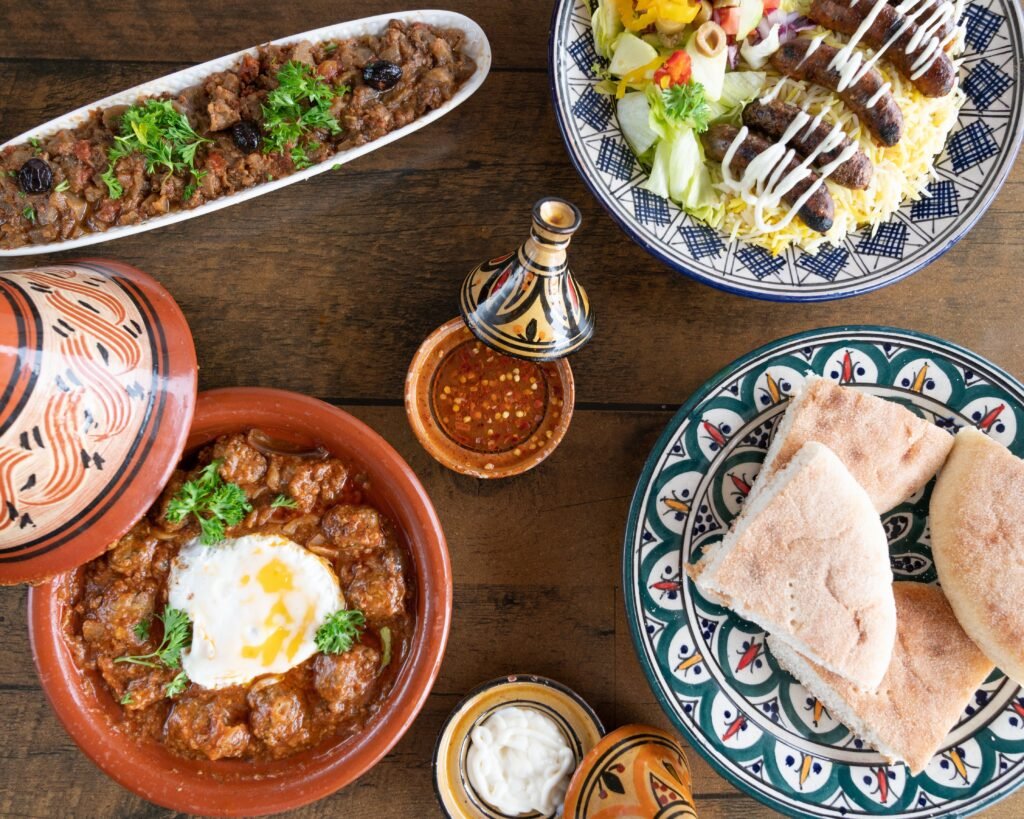
Food is one area where Morocco can be very affordable.
A simple breakfast may cost around €3–€6, while a local lunch can often be found for approximately €4–€8. A more comfortable restaurant meal can range from €10–€20 or more, depending on the location and restaurant.
Street food and local restaurants are usually the best choice for budget travelers. Moroccan staples such as tagine, couscous, harira, brochettes, sandwiches, and msemen can provide filling meals without putting much pressure on your budget.
For a practical daily food budget, consider:
- Budget: €8–€15 per person
- Mid-range: €15–€30 per person
- Comfortable: €30–€50+ per person
Drinks can add up, particularly if you spend your evenings in tourist-oriented restaurants. Bottled water, fresh juices, mint tea, coffee, and soft drinks are generally manageable, but ordering drinks with every meal can noticeably increase your daily spending.
A useful strategy is to eat at local restaurants for lunch and choose one special dinner during your stay. This gives you a chance to experience Morocco’s food culture without making every meal expensive.
3. Transportation Costs in Morocco
Morocco has a good range of transportation options, and your choice can make a significant difference to your budget.
Trains
Trains are a practical option between major cities such as Marrakech, Casablanca, Rabat, and Fes. They are generally comfortable and much cheaper than hiring a private vehicle.
Depending on the route and class, intercity train journeys commonly cost somewhere around €3–€15.
For travelers visiting several major cities, trains can be an excellent way to keep transportation costs under control.
Buses
CTM and other long-distance bus services connect destinations that are not served directly by rail.
A typical intercity bus journey may cost approximately €3–€25, depending on the distance and service.
Buses are particularly useful for destinations such as Chefchaouen, Essaouira, Agadir, and Ouarzazate.
Taxis
Morocco has two common types of taxis.
Petit taxis operate within cities, while grand taxis are generally used for longer journeys and routes between towns.
Always confirm the price before getting into a taxi when a meter is not being used. Having smaller notes and coins is also useful.
Private drivers and transfers
Private transportation is more expensive than public transport, but it can make sense when traveling as a family, couple, or small group.
A private driver can also be particularly useful when visiting the Atlas Mountains, Dades Valley, Todra Gorge, Ait Benhaddou, and the Sahara, where public transport may not provide the same flexibility.
If several people are sharing the vehicle, the cost per person can become much more reasonable.
4. How Much Should You Budget for a Morocco Desert Tour?
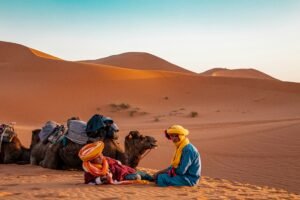
For many travelers, the Sahara Desert is one of the main reasons for visiting Morocco.
A desert tour is not really comparable with an ordinary sightseeing activity because the price can include transportation, accommodation, meals, a camel trek, a driver/guide, and transfers.
Morocco Best Tour offers Marrakech desert itineraries ranging from shorter 3-day trips to longer multi-day journeys, with options for different travel styles.
For example, the 3 Days From Marrakech itinerary includes transportation, an experienced driver/guide, camel trekking, accommodation, desert camping, breakfast and dinner, and a 4×4 alternative for the camp transfer. Lunches, drinks, optional entrances, and tips are listed separately.
This is important when comparing tour prices. A cheaper-looking tour may not actually be cheaper once you add transportation, meals, accommodation, and activities that another package already includes.
If the Sahara is a priority, it is often better to allocate a larger portion of your Morocco travel budget to one well-organized desert experience rather than trying to make every day as cheap as possible.
Travelers who have more time can also consider longer itineraries. A 12-day Morocco itinerary from Marrakech, for example, combines the desert with coastal and cultural destinations and includes multiple nights of accommodation and private transportation.
5. Day Trips and Activities
You do not need to spend a lot every day to have a memorable trip.
Many of Morocco’s best experiences are inexpensive or free. Walking through a medina, exploring souks, watching daily life in a public square, visiting local markets, hiking in accessible areas, or relaxing by the coast can cost very little.
For paid experiences, keep around €5–€30 per activity as a general planning range, although guided excursions and premium experiences can cost significantly more.
A smart way to manage your budget is to mix free sightseeing with one paid activity every few days.
For example, if you are staying in Marrakech, you could combine independent exploration with a High Atlas Mountains day trip. Another day could be spent walking around the city and visiting markets without booking an organized excursion.
If you want a desert atmosphere without committing to a multi-day Sahara journey, an Agafay day trip from Marrakech can also be an option to consider.
6. How Much Does Morocco Cost for 7 Days?
For a seven-day trip excluding international flights, here are useful planning ranges.
Budget 7-day Morocco trip
Plan approximately €210–€350 per person.
This assumes:
- Hostel or basic accommodation
- Local restaurants and street food
- Trains and buses
- Limited paid attractions
- Mostly independent sightseeing
This budget requires some discipline, but Morocco is one of the destinations where careful travelers can make it work.
Comfortable 7-day Morocco trip
Plan approximately €420–€700 per person.
This could include:
- Private rooms in good riads
- A mix of local and tourist-friendly restaurants
- Trains, buses, and occasional taxis
- Several paid attractions
- One organized day trip
Mid-range 7-day Morocco trip
Plan approximately €500–€850 per person.
This gives you more flexibility with accommodation, dining, taxis, guides, and excursions.
If your itinerary includes a private Sahara desert tour, your total may be higher because the desert experience becomes one of the largest individual expenses.
7. How Much Money Do You Need for 10 Days in Morocco?
For ten days, a useful starting point is:
- Budget: €300–€500
- Comfortable: €600–€900
- Mid-range: €750–€1,200
- Private/comfortable: €1,200–€2,000+
- Luxury: €2,500+
Again, these are excluding international flights.
A ten-day itinerary is long enough to combine cities with the mountains, desert, or coast. However, trying to cover too much territory can increase your transportation costs.
Instead of constantly moving hotels, consider spending two or three nights in major destinations and then using a well-planned tour for the longer routes.
You can browse the Morocco Best Tour collection of Morocco tours to compare different itineraries and choose one that fits your available time and budget.
8. How Much Cash Should You Carry in Morocco?
Moroccan currency is the Moroccan dirham (MAD).
Cards are increasingly accepted in hotels, larger restaurants, shops, and many tourist businesses, but cash remains important.
You will commonly need cash for:
- Small restaurants
- Local markets
- Taxis
- Tips
- Small shops
- Street food
- Rural areas
- Small entrance fees
You do not need to carry your entire holiday budget in cash.
A practical approach is to keep a modest amount of dirhams available and withdraw more when necessary. Carry smaller denominations because changing a large note can sometimes be inconvenient for small purchases.
It is also wise to keep your cash in more than one place rather than putting everything in one wallet.
9. Tips and Other Small Expenses to Include
Travelers often calculate accommodation, food, and transportation but forget the smaller expenses.
Your Morocco travel budget should also allow for:
Tips
Tipping is common in Morocco. You may want to budget for restaurant staff, guides, drivers, hotel staff, and other service providers.
For a longer private tour, tips for your driver and guide can become a noticeable expense, so plan for them before your trip rather than treating them as an unexpected cost.
SIM card and mobile data
A local SIM or travel eSIM can be useful for maps, translation, WhatsApp, hotel communication, and booking information.
Budget around €5–€20 for basic connectivity, depending on the provider and amount of data you need.
Entrance fees
Museums, historic sites, gardens, monuments, and other attractions may charge separate entrance fees.
Keep a small daily activity allowance rather than assuming every sightseeing stop is free.
Shopping
Morocco is famous for carpets, leather goods, ceramics, spices, lamps, textiles, argan products, and handicrafts.
Shopping can easily become one of the biggest unexpected expenses.
Set a separate shopping budget before entering the souks. This prevents souvenirs from quietly consuming the money you had allocated for transportation or meals.
10. Ways to Save Money on a Morocco Trip
You do not need to sacrifice the quality of your trip to spend less.
Travel outside peak periods
Accommodation prices can rise during busy periods. If your dates are flexible, compare different weeks before booking.
Stay in riads
A good riad can provide better value than a conventional hotel, particularly when breakfast is included.
Eat locally
Look for busy restaurants filled with local residents rather than choosing restaurants solely because they are in the busiest tourist area.
Use public transport between major cities
Trains and buses are usually much cheaper than private transfers.
Share private transportation
If you are traveling with friends or family, a private vehicle can become surprisingly good value when the cost is divided among several people.
Choose experiences carefully
You do not need to book an excursion every day. Select two or three experiences that are genuinely important to you and leave room for independent exploration.
Compare what a tour includes
When comparing Sahara tours, look at accommodation, meals, transport, guide services, camel trekking, camp transfers, and other inclusions—not just the headline price.
11. A Realistic Morocco Budget Example for a Couple
Imagine two people spending ten days in Morocco.
A comfortable trip could look approximately like this:
Accommodation: €700
Food and drinks: €400
Local and intercity transport: €200
Activities and entrance fees: €150
Tips and miscellaneous expenses: €100
Total: approximately €1,550 for two people, excluding international flights.
This is only an example. A couple using hostels, local restaurants, public transportation, and fewer paid activities could spend substantially less. A private desert tour, luxury riads, premium restaurants, and private transfers could push the total much higher.
The key is to decide which experiences deserve the biggest share of your budget.
12. What Should You Budget for a Sahara Experience?
If seeing the Sahara is one of your main goals, do not build your itinerary around the lowest possible price.
A good desert trip involves long distances, experienced local drivers, suitable accommodation, desert logistics, meals, and coordination between different parts of the journey.
For example, Morocco Best Tour’s three-day Marrakech-to-Merzouga itinerary includes a private air-conditioned vehicle, experienced driver/guide, camel trekking, a hotel night, desert camp accommodation, breakfast and dinner, and a 4×4 alternative to the camel transfer.
That kind of package can simplify your trip because several individual expenses are combined.
If your budget is limited, you can reduce costs elsewhere—such as choosing a simpler riad in Marrakech or eating at local restaurants—while keeping the desert experience you really want.
FAQ: Morocco Travel Budget
Is Morocco expensive to visit?
Morocco can be a relatively affordable destination, especially for travelers using local accommodation, restaurants, and public transportation. However, private tours, luxury hotels, and premium experiences can make a trip considerably more expensive.
How much money do I need per day in Morocco?
A backpacker can plan around €30–€50 per day, while a comfortable traveler may need approximately €60–€120 per day. Private and luxury travel can cost €150–€250+ per day.
Is €50 a day enough for Morocco?
Yes, €50 per day can be enough for a budget traveler if accommodation, food, transportation, and activities are chosen carefully. It becomes more difficult if you want private rooms, frequent taxis, or organized excursions.
How can I save money on a Morocco desert tour?
Compare what is included rather than choosing solely by price. Accommodation, meals, transportation, camel trekking, camp transfers, and guide services can make a major difference to the real value of a tour.
Planning a Morocco trip is easier when you know where your money is likely to go. With a realistic budget for accommodation, food, transportation, activities, and tours, you can enjoy Morocco without overspending while still making room for unforgettable experiences like the Sahara Desert. Ready to start planning your adventure? Explore our Morocco tours and find an itinerary that fits your travel style and budget.
If you have already visited Morocco, how did you divide your travel budget between accommodation, food, transport, and experiences—and which part of the trip turned out to be worth spending more on?