Visiting the Sahara Desert in winter is one of the best ways to experience Morocco’s desert landscapes without the intense heat of summer. Days are often comfortable for sightseeing and camel rides, while nights can become genuinely cold, especially in the open desert around Merzouga and the Erg Chebbi dunes. If you are planning a winter desert trip, the key is knowing how temperatures, daylight, accommodation, road conditions, and desert activities change during the colder months.
This guide explains what winter in the Moroccan Sahara is really like, what temperatures to expect, what to pack, how to choose a desert camp, and how to plan your journey from Marrakech, Fes, or another Moroccan city. You will also find practical advice for camel trekking, photography, stargazing, and making the most of short winter days.
Is Winter a Good Time to Visit the Sahara Desert?
Yes. Winter can be an excellent time for a Sahara Desert trip, particularly if you prefer cooler daytime temperatures and want to avoid Morocco’s summer heat.
The main winter months are generally December, January, and February, although cooler conditions can extend into November and March. The Sahara remains dry and sunny much of the time, but the difference between daytime and nighttime temperatures is important.
During the day, you may be comfortable wearing a light jacket or sweater, particularly in the sunshine. Once the sun goes down, however, temperatures can fall sharply. The desert has very little vegetation or moisture to retain heat after sunset, so the evening and early morning can feel surprisingly cold.
Winter also brings shorter daylight hours. This matters when planning a desert itinerary because you have less time between sunrise and sunset for driving, sightseeing, and camel trekking.
For travelers who dislike extreme heat, however, these cooler conditions can be a major advantage.
What Is the Weather Like in the Sahara in Winter?
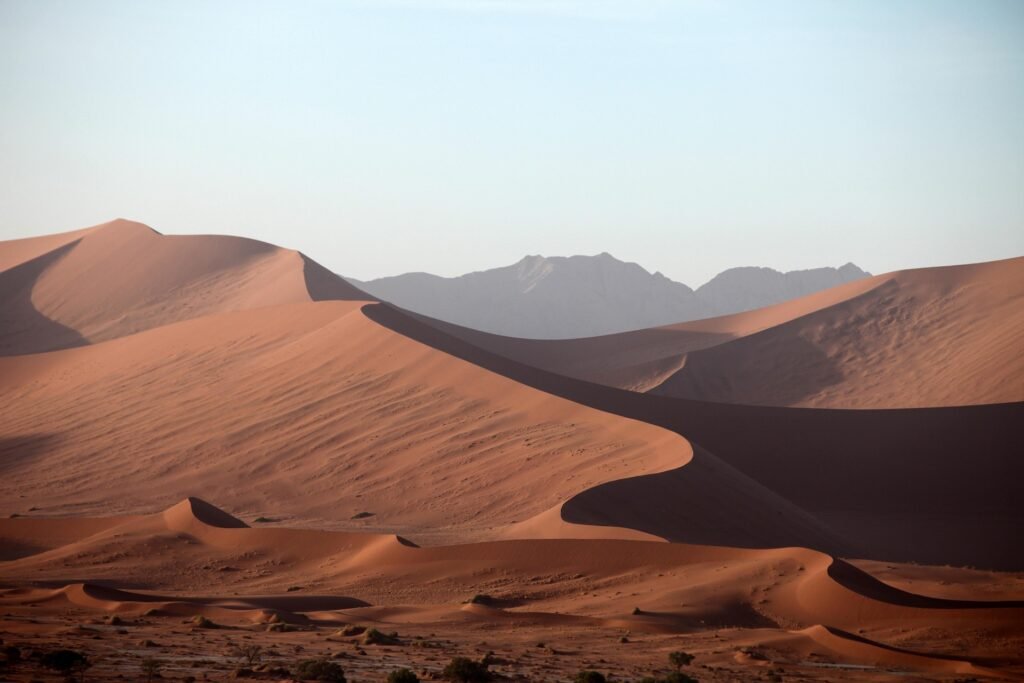
Winter weather in Morocco’s Sahara is usually dry, sunny, and much cooler than the summer months. But the desert is not simply “cold all day.” The most noticeable feature is the large temperature difference between daytime and nighttime.
Daytime temperatures
During sunny winter days, temperatures in the Merzouga area can feel pleasant, especially when you are walking through the dunes or sitting in direct sunlight.
A winter afternoon may be comfortable for:
- Camel trekking
- Walking through the dunes
- Sandboarding
- 4×4 excursions
- Photography
- Visiting nearby villages and oases
- Sitting outside your camp during the afternoon
A light jacket or fleece is usually useful in the morning, while you may be able to remove layers once the sun becomes stronger.
Nighttime temperatures
This is where winter travelers need to prepare properly.
After sunset, the temperature can drop considerably. In December and January, desert nights can feel close to freezing, particularly during clear, windless nights. Conditions vary, so you should not rely on a generic temperature forecast for Marrakech or Fes when deciding what to pack for Merzouga.
The combination of cold air, wind, and sitting outdoors around a campfire can make the evening feel even colder.
Pack for the night, not just the afternoon.
This is one of the most important pieces of advice for anyone planning a Sahara trip in winter.
Where Is the Moroccan Sahara Desert?
When travelers talk about visiting the Sahara in Morocco, they often mean the Erg Chebbi dunes near Merzouga. This is one of Morocco’s best-known desert areas and a popular destination for camel trekking and overnight desert camps.
Erg Chebbi is famous for its large golden sand dunes, desert camps, spectacular sunrises, and clear night skies.
Other southern Moroccan landscapes also form part of the wider desert experience, including the Ziz Valley, Draa Valley, rocky desert areas, oases, kasbahs, and the roads connecting the Sahara with towns such as Erfoud and Merzouga.
If you are starting in Marrakech, reaching the true dunes requires a multi-day journey. The route commonly crosses the High Atlas Mountains and continues through places such as Ouarzazate, the Dades Valley, Todra Gorge, Erfoud, and finally Merzouga.
Morocco Best Tour’s Marrakech desert tours include several itineraries designed to connect Marrakech with the Sahara, with different trip lengths available.
What to Expect During a Winter Desert Tour
A winter Sahara tour is not simply a summer desert tour with lower temperatures. The season changes the rhythm of the experience.
1. Cold mornings
Expect to wake up early if you want to see the sunrise.
Winter sunrise can be spectacular, but you will probably want a warm jacket, hat, and possibly gloves while standing on a dune waiting for the first light.
The coldest part of the day can be shortly before sunrise. Once the sun appears, the temperature gradually becomes more comfortable.
2. Pleasant afternoons
After the morning chill disappears, the desert can become very enjoyable.
This is an excellent time for walking on the dunes or simply sitting outside your camp with a cup of Moroccan mint tea.
Because the summer heat is absent, you can spend more time outdoors without constantly looking for shade.
3. Very cold evenings
The temperature can change quickly after sunset.
If your itinerary includes dinner outside, music around a campfire, or stargazing, keep your warmest layers accessible rather than leaving them inside your main luggage.
4. Shorter daylight hours
Winter days are shorter than summer days, so your itinerary needs to work around sunrise and sunset.
This is particularly important for camel trekking. You should allow enough time to reach the dunes before sunset rather than trying to fit too many sightseeing stops into the same afternoon.
What Is a Winter Night in a Sahara Desert Camp Like?
Spending a night in a desert camp is one of the highlights of a Sahara trip, but winter travelers should choose their accommodation carefully.
There are different levels of desert camping, from simple traditional tents to more comfortable private or luxury-style camps.
Before booking, ask what heating is available in the sleeping area.
Some camps provide warm blankets, while others may have heating arrangements or other ways of making the tent more comfortable during cold nights. Facilities vary, so do not assume that every desert camp offers the same level of winter comfort.
A good winter camp should give you somewhere warm and comfortable to sleep, but you should still bring appropriate clothing.
For a more comfortable experience, look for:
- Private accommodation if preferred
- Proper bedding and warm blankets
- A sheltered dining area
- Good bathroom facilities
- Reliable transport between the camp and the main desert area
- Clear information about heating during winter
- Flexible arrangements if weather or road conditions change
If you want a more immersive but still comfortable experience, Morocco Best Tour’s 3-day Marrakech to Merzouga desert tour includes a night at a desert camp, a sunset camel ride, dinner and breakfast, and a 4×4 alternative to the camel transfer.
What Should You Pack for the Sahara in Winter?
Packing correctly makes a huge difference.
The biggest mistake is bringing clothing suitable only for warm desert afternoons.
Essential winter clothing
Bring layers rather than one extremely heavy item.
A practical combination is:
- Long-sleeved shirts
- T-shirts for layering
- Fleece or warm sweater
- Insulated jacket or warm coat
- Comfortable trousers
- Warm socks
- Hat or beanie
- Light scarf
- Gloves
- Comfortable walking shoes
- Sunglasses
Layering is particularly useful because temperatures can change dramatically during the day.
You can wear several layers early in the morning, remove some during the afternoon, and put them back on before sunset.
Other useful items
Do not forget:
- Sunscreen
- Lip balm
- Reusable water bottle
- Small backpack
- Power bank
- Camera or phone
- Headlamp or small flashlight
- Personal medication
- Tissues and wet wipes
- Hand sanitizer
A small backpack is more useful for the desert camp than carrying your entire suitcase into the dunes.
Ask your tour operator what luggage arrangements are available. On some itineraries, your main luggage can remain with the vehicle while you take only what you need for the overnight camp.
What Should You Wear for a Camel Ride in Winter?
A winter camel ride requires slightly different preparation from a summer ride.
Wear comfortable trousers rather than shorts, as you will spend time sitting on the camel and moving through the sand. Closed shoes are also preferable.
For an afternoon camel ride, layers work well. Keep a warm jacket accessible because the temperature can start falling as the sun approaches the horizon.
If the camel trek takes place around sunset, you will notice the temperature changing during the ride.
A scarf can also be useful if there is wind or blowing sand.
If you are uncomfortable riding a camel or have mobility concerns, ask whether a 4×4 transfer is available. Some Morocco Best Tour desert itineraries explicitly offer a 4×4 alternative to camel transfers.
Is Camel Trekking Better in Winter?
For many travelers, yes.
Camel trekking in the Sahara during summer can be uncomfortable because of high temperatures, particularly in the middle of the day. Winter’s cooler conditions make outdoor activities easier.
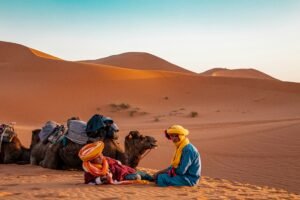
A typical experience around Erg Chebbi involves reaching the dunes in the afternoon, riding a camel toward the desert camp, stopping to watch the sunset, and continuing to the camp for dinner and an overnight stay.
In winter, the main thing to remember is that the camel ride may finish after sunset or close to it. Have your warm clothing ready.
If you want to focus specifically on the camel experience, Morocco Best Tour also offers dedicated camel trekking experiences in the Erg Chebbi dunes, alongside its wider Sahara itineraries.
Winter Sunsets and Sunrises in the Sahara
Winter is particularly rewarding for travelers who enjoy photography.
The low winter sun can create long shadows across the dunes, emphasizing the curves and ridges of the sand. Sunset is usually one of the most memorable moments of a desert tour.
But do not forget the morning.
A winter sunrise over Erg Chebbi can be beautiful, and the cooler air makes standing on a dune more comfortable once you are properly dressed.
Bring your camera or phone fully charged, because the best light can disappear quickly.
A power bank is especially useful because you may spend several hours away from electrical outlets.
Can You See the Stars in Winter?
The Sahara is an excellent place for stargazing, and winter can be a particularly rewarding season.
Clear, dry nights can provide impressive views of the night sky. Because there is far less artificial light around the dunes than in major cities, the stars can appear much brighter.
However, stargazing in winter requires warm clothing.
You may be tempted to spend a long time outside looking at the sky, but the temperature can become uncomfortable quickly once you stop moving.
Wear your warmest layers, bring a hat, and consider taking a scarf or blanket outside.
If astronomy is one of your main interests, check the moon phase when planning your trip. A darker moon can provide better conditions for seeing faint stars, while a bright moon can illuminate the dunes beautifully for photography.
Is the Sahara Desert Busy in Winter?
Winter can be a popular period for visiting Morocco, especially around Christmas, New Year, and other holiday periods.
The Sahara does not necessarily feel crowded all the time, but demand for popular desert tours and camps can increase during peak travel dates.
If you are traveling around late December or early January, it is sensible to arrange your accommodation and desert tour in advance.
Outside major holiday periods, winter can offer a pleasant balance between comfortable weather and a lively travel atmosphere.
Traveling to the Sahara from Marrakech in Winter
The journey from Marrakech to Merzouga is part of the experience.
A typical route crosses the High Atlas Mountains and continues through southern Morocco before reaching the Sahara.
Morocco Best Tour’s 3-day Marrakech to Merzouga itinerary travels through the High Atlas, Ouarzazate, the Rose Valley, Dades Gorges, Todra Gorge, Erfoud, and Merzouga before returning to Marrakech.
Winter travelers should pay particular attention to the High Atlas section.
The desert itself may be sunny while mountain roads are much colder. Snow and difficult conditions can occasionally affect high mountain passes in winter, so flexibility is useful when traveling between Marrakech and the Sahara.
This is another reason to travel with an experienced local driver or tour operator who can adjust the route when necessary.
Traveling to the Sahara from Fes in Winter
Fes is another excellent starting point for a Moroccan Sahara trip.
The route from Fes toward Merzouga crosses the Middle Atlas and can include Ifrane, the cedar forests around Azrou, Midelt, the Ziz Valley, Erfoud, and Merzouga.
This route is particularly interesting in winter because the landscape can change dramatically.
You may leave Fes in cold conditions, pass through mountain scenery where snow is possible, and eventually reach the much drier desert environment.
Morocco Best Tour’s 5-day Fes desert tour includes Ifrane, the cedar forest, Midelt, the Ziz Valley, and Merzouga, followed by a camel trek and overnight desert camp.
If your trip starts in Fes, allow enough time for the journey rather than trying to rush directly to the dunes.
Is a 2-Day Sahara Tour Enough in Winter?
It depends on where you start.
A two-day desert excursion can work well when starting relatively close to Merzouga, such as Errachidia. Morocco Best Tour offers a 2-day Errachidia to Merzouga desert tour that includes a camel ride, sunset, a desert camp overnight, and a return journey through the desert region.
From Marrakech, however, a very short Sahara itinerary means spending a significant amount of time driving.
If your main goal is to enjoy the desert rather than simply reach it, three or more days from Marrakech usually gives you a better balance.
Is Winter Suitable for Families?
Yes, but families should plan for the temperature difference.
Children may enjoy the dunes, camel ride, campfire, and stars, but they can become cold quickly after sunset.
Bring warm layers for every child and keep jackets, hats, and gloves accessible.
Families should also consider how much time they want to spend in the vehicle. A private itinerary can be particularly useful because you can request additional stops and adjust the pace around your family’s needs.
For families with young children, ask about the distance of the camel ride, camp facilities, bathroom arrangements, and the availability of 4×4 transfers.
What About Food and Drinks in the Winter?
Desert camp meals are generally based around Moroccan cuisine, and a hot dinner is especially welcome after sunset in winter.
You may encounter dishes such as tagines, couscous, soups, salads, bread, and Moroccan tea, depending on the camp and itinerary.
Keep a bottle of water with you during the day even though temperatures are lower than in summer. Dry desert air, walking, and travel can still lead to dehydration.
Warm tea around the campfire can be a pleasant part of the evening, but it should not replace drinking enough water throughout the day.
Winter Desert Travel: Practical Tips
A few simple decisions can make your trip considerably more comfortable.
Check the forecast for the desert, not just your arrival city
Marrakech weather does not tell you what conditions will be like in Merzouga. Check the forecast for the actual desert destination and mountain areas on your route.
Keep warm clothing in your day bag
Do not put your jacket and hat in luggage that you will not have immediate access to.
Start sightseeing early
Winter has shorter days, so use daylight efficiently.
Allow flexibility around mountain crossings
Weather in the High Atlas can be very different from conditions in the desert.
Bring cash
Some small businesses and stops along the route may not accept cards.
Wear suitable shoes
Sand is easier to walk through with secure, comfortable footwear than open sandals.
Protect your electronics
Sand can get into camera equipment, phone ports, and bags. Keep electronics protected when not in use.
Do not underestimate the cold
A sunny desert afternoon can make winter feel deceptively warm. Once the sun disappears, conditions change quickly.
Should You Visit the Sahara in December, January, or February?
All three months can work, but each has slightly different characteristics.
December
December offers cool desert days and cold nights. The Christmas and New Year period can be busy, so advance planning is recommended.
January
January is generally one of the coldest periods of the year. It is an excellent choice if you prefer cooler conditions but requires serious attention to warm clothing, especially for overnight camping.
February
February begins to move toward milder conditions, although nights can still be cold. It can be a good compromise for travelers who want winter-like desert weather without the coldest part of the season.
The exact conditions vary from year to year, so treat these as seasonal patterns rather than guarantees.
Frequently Asked Questions About the Sahara Desert in Winter
Does it snow in the Sahara Desert?
Snow is not typical in the sandy desert around Merzouga, but winter snow can occur in Morocco’s Atlas Mountains. This matters if your route crosses a high mountain pass between Marrakech and the desert.
How cold does the Sahara get at night?
Winter nights can become very cold, particularly in December and January. Temperatures can approach freezing during some nights, so warm layers and suitable bedding are important.
Is the Sahara warm in winter during the day?
It can be pleasantly warm in direct sunshine during the afternoon, but conditions vary. Mornings, evenings, and shaded areas are considerably colder.
What is the coldest month in the Moroccan Sahara?
January is generally among the coldest months, particularly at night. However, weather varies and individual nights can be warmer or colder than the seasonal average.
Can you ride camels in the Sahara in winter?
Yes. Camel trekking operates during winter, and the cooler temperatures can make the experience more comfortable than during the hottest months. Bring warm layers, especially for sunset rides.
Is desert camping comfortable in winter?
It can be, provided you choose a camp with suitable winter bedding and facilities. Ask your tour operator about blankets, heating, bathrooms, and the type of tent before booking.
What should I wear to the Sahara in winter?
Dress in layers. Bring warm trousers, long sleeves, a fleece or sweater, a warm jacket, thick socks, a hat, and gloves. Sunglasses and sunscreen remain useful during the daytime.
Is winter a good time for stargazing in Merzouga?
Yes, provided skies are clear. The low light pollution around the desert can offer excellent stargazing conditions, although winter temperatures mean you should dress warmly.
How many days do I need for a Sahara trip from Marrakech?
Three days is a common option for reaching Merzouga and experiencing a desert camp, camel ride, sunset, and sunrise. A longer itinerary gives you more time for the Dades Valley, Todra Gorge, villages, and other stops rather than spending most of the trip driving.
The Sahara Desert in winter offers a comfortable and rewarding alternative to Morocco’s hotter seasons, with pleasant daytime conditions, spectacular sunsets, clear night skies, and far fewer problems with extreme heat—but you must prepare for genuinely cold mornings and nights. Pack warm layers, choose your desert camp carefully, allow flexibility for mountain weather, and give yourself enough time to enjoy the journey rather than rushing to the dunes. If you are ready to experience Erg Chebbi in the cooler season, explore Morocco Best Tour’s Sahara itineraries and contact the local team to plan a desert trip around your dates, starting city, and preferred travel style.