Getting married in Morocco can be an unforgettable experience. Imagine exchanging vows in a traditional riad in Marrakech, celebrating beneath lanterns in the Agafay Desert, or combining your wedding with a private journey through the Atlas Mountains and Sahara.
But planning a wedding in Morocco involves more than choosing a beautiful venue. Couples also need to understand Moroccan marriage law, document requirements, religious restrictions, translations, accommodation, transportation, weather, and the difference between a legal Moroccan marriage and a symbolic destination wedding.
For international couples, the legal process can be considerably more complicated than arranging a wedding ceremony and reception. Requirements can also vary according to nationality and whether one of the partners is Moroccan.
This 2026 guide explains the practical points travelers should know before planning a wedding in Morocco, including where to get married, legal requirements, documents, costs to consider, cultural etiquette, and how to combine your wedding with a Moroccan honeymoon.
Important: Marriage requirements can change and may differ according to nationality and personal circumstances. Always confirm the current requirements with the Moroccan family court or Adoul handling the marriage and with your own embassy or consulate before booking non-refundable travel or wedding services.
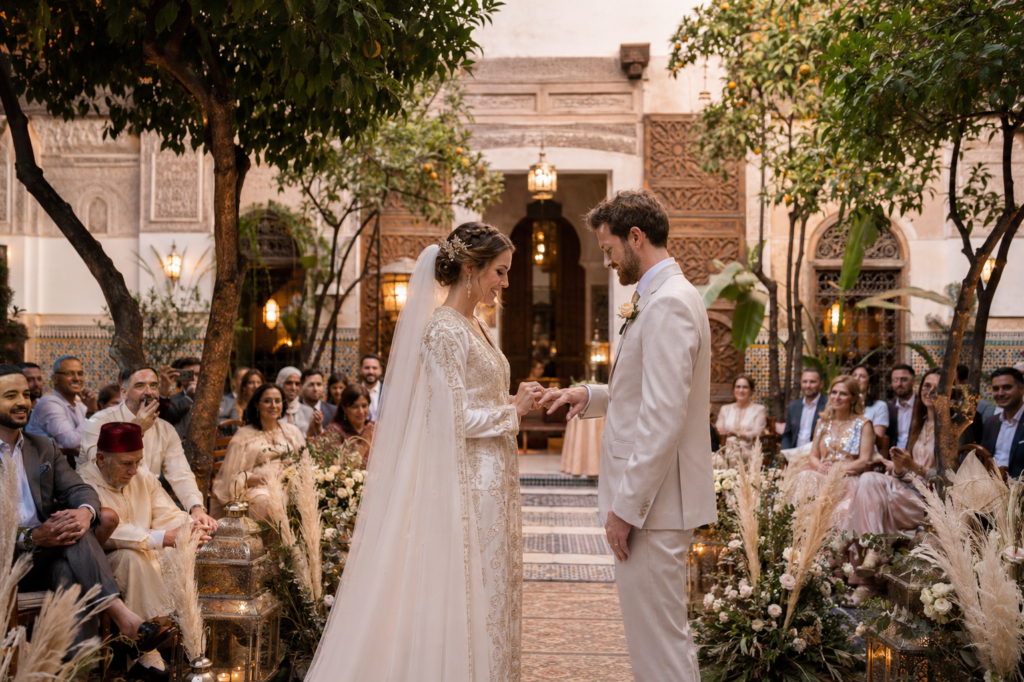
Is Morocco a good place to get married?
Yes, Morocco can be an excellent destination wedding location, particularly for couples looking for culture, architecture, desert landscapes, food, and a wedding that feels different from a conventional resort celebration.
The country offers several very different settings:
- Marrakech: Ideal for riads, luxury hotels, gardens, palaces, rooftop celebrations, and easy access to wedding suppliers.
- Agafay Desert: A convenient desert-style setting close to Marrakech, particularly suitable for sunset ceremonies and private dinners.
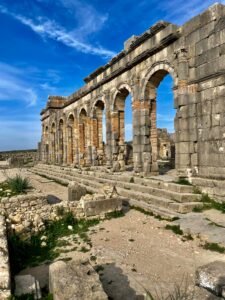
- Fes: A strong choice for couples interested in historic architecture, traditional riads, and Moroccan heritage.
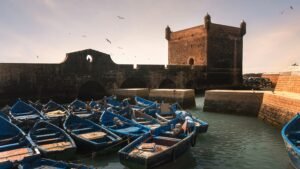
- Essaouira: Attractive for a relaxed coastal wedding with a more bohemian atmosphere.
- Atlas Mountains: Suitable for intimate celebrations surrounded by mountain scenery.
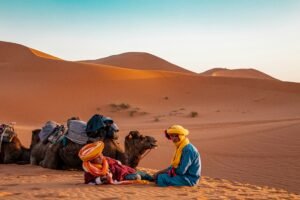
- Sahara Desert: Memorable for a small symbolic ceremony or honeymoon experience, especially around Merzouga and the Erg Chebbi dunes.
Morocco Best Tour also specifically offers weddings and honeymoon experiences, alongside private tours and customized journeys, making it possible to combine the wedding with sightseeing and transportation around the country.
Can foreigners legally get married in Morocco?
This is the first question to resolve before making wedding plans.
Moroccan law allows marriages involving people of different nationalities, but foreign nationals are subject to additional procedures and documentation. The Moroccan Ministry of Solidarity states that a marriage file can include a marriage authorization for foreigners and a certificate of capacity to marry, or an equivalent document for foreign nationals.
The exact process depends heavily on the couple’s nationality, religion, marital history, and circumstances.
If one partner is Moroccan
The process is generally more established, but the foreign partner should expect additional paperwork and approval through the Moroccan family court.
For example, official UK guidance says that British nationals marrying a Moroccan partner must satisfy Moroccan requirements and obtain documents proving they are free to marry. The UK guidance also advises couples to contact the Moroccan marriage office, known as an Adoul, to confirm the exact local requirements.
If both partners are foreign nationals
Do not assume that two tourists can simply arrive in Morocco, book a venue, and complete a legal Moroccan marriage.
The rules can be more complicated, and the procedure depends on nationality and eligibility. If neither partner is Moroccan, contact the relevant Moroccan authorities and your embassy well before your trip to establish whether a legally recognized Moroccan marriage is possible in your circumstances.
For many international couples, the simplest solution is to complete the legal marriage in their home country and hold a symbolic wedding ceremony in Morocco. This can provide the destination-wedding experience without making the Moroccan legal procedure the centerpiece of the trip.
What documents are needed to get married in Morocco?
There is no single document checklist that applies identically to every foreign national.
However, Moroccan authorities list several core documents for a marriage file, including birth records, administrative certificates, medical certificates, marriage authorization where applicable, and a certificate of capacity to marry for foreigners.
Depending on your nationality and circumstances, you may be asked for documents such as:
- Valid passport
- Birth certificate
- Proof of marital status or proof that you are free to marry
- Certificate of no impediment or equivalent document, where applicable
- Divorce decree or previous spouse’s death certificate if previously married
- Medical certificate
- Police or criminal record certificate, depending on nationality and local requirements
- Passport photographs
- Documents relating to your Moroccan partner, if applicable
- Proof of residence or accommodation
- Certified translations into Arabic
- Legalization or authentication of foreign documents
Documents for British citizens
British citizens have a particularly clear official process. If living in the UK, a British citizen generally needs a Certificate of No Impediment from a UK register office.
British citizens who do not live in the UK may instead need a marital status affirmation and a certified copy of their passport. These documents must then be legalized in Morocco, and documents submitted to the Moroccan court need to be translated into Arabic. The British government also notes that some Moroccan courts may still ask for a CNI, so couples should confirm the requirement with the local Adoul.
If you are from another country, contact your embassy or consulate for nationality-specific instructions rather than copying another country’s checklist.
Translation and legalization: plan this early
One of the easiest ways to create delays is leaving document translation and legalization until the last minute.
Foreign documents may need to be authenticated or legalized before Moroccan authorities will accept them. They may also need certified translation into Arabic.
The exact procedure depends on the country that issued the document. Some documents may need to go through several stages before they can be submitted to the Moroccan court.
A practical approach is to create a document folder several months before your wedding and check every document for:
- Correct spelling of names
- Matching dates of birth
- Validity dates
- Required signatures or seals
- Authentication or legalization
- Certified Arabic translation
- Number of original and photocopied versions required
Do not rely on scanned copies alone. Bring originals and several copies of important documents.
Religious requirements you need to understand
Religion can affect eligibility for a legal marriage in Morocco.
Morocco’s official family guidance states that certain interfaith marriages are subject to religious restrictions. For example, it states that a Muslim woman cannot marry a non-Muslim man, while a Muslim man may marry a non-Muslim woman who belongs to the “People of the Book.”
British government guidance similarly states that, for a British citizen marrying a Moroccan national, a foreign man must be Muslim or convert to Islam, while a foreign woman must be Christian, Jewish, or Muslim.
Because religion can directly affect eligibility, couples should establish this issue before paying deposits for a legal Moroccan wedding.
If your ceremony is symbolic rather than legally registered in Morocco, your options may be much more flexible, but you should still respect local customs and your venue’s rules.
Where should you get married in Morocco?
Marrakech: the easiest all-round choice
For most destination weddings, Marrakech is the most practical starting point.
The city has a large selection of riads, hotels, private villas, restaurants, gardens, event spaces, photographers, florists, caterers, musicians, and transport providers.
It is also an excellent base for guests who want to extend their trip before or after the wedding.
If your guests have never visited Morocco, consider building a few activities into the itinerary. A guided Medina visit, cooking experience, or private excursion can turn the wedding into a complete group holiday.
For couples planning additional travel, the Marrakech tours collection includes itineraries of different lengths, including private desert journeys and longer Morocco routes.
Agafay Desert: a desert wedding without going deep into the Sahara
Agafay is one of the most practical options if you want a desert atmosphere without sending wedding guests on a long journey to Merzouga.
Located close to Marrakech, Agafay is known for rocky desert landscapes, sunset views, private camps, outdoor dinners, and romantic settings.
A private Agafay Desert day experience can also work well as a pre-wedding or post-wedding activity for guests.
For a wedding weekend, you could arrange a welcome dinner, ceremony, sunset photography session, and Moroccan-style celebration in the same general area.
The Sahara: spectacular, but less convenient
The Sahara offers some of Morocco’s most dramatic scenery, especially around Merzouga and the Erg Chebbi dunes.
However, it is not necessarily the easiest location for a large wedding. Travel times are longer, weather conditions can be demanding, and moving formal wedding equipment into a remote desert camp requires careful planning.
It can be a better choice for an intimate symbolic ceremony or honeymoon experience after the main wedding in Marrakech.
For couples who want to combine their wedding with the Sahara, the 3-day Marrakech to Merzouga desert tour includes the High Atlas, Dades area, camel trekking, and an overnight desert camp.
Ready to plan your dream trip to Morocco?
Contact us today to get a custom itinerary tailored to your schedule and preferences!”
What is the best time of year to get married in Morocco?
The best wedding season depends on the location and the type of ceremony you want.
Spring: March to May
Spring is one of the most attractive periods for a wedding in Morocco. Temperatures are generally more comfortable than during the summer, landscapes can be greener, and Marrakech is particularly pleasant for outdoor events.
April and May are popular choices, so book venues and accommodation early.
Autumn: September to November
Autumn is another excellent period, particularly September and October.
Temperatures become more manageable after summer, while evenings can be comfortable for outdoor dinners.
Summer: June to August
Summer can be extremely hot in Marrakech and inland areas.
If you choose a summer wedding, consider an evening ceremony, air-conditioned accommodation, shaded reception areas, and a venue designed for hot weather.
The coast can be more comfortable than inland cities.
Winter: December to February
Winter can work very well for a wedding, especially during the day in Marrakech, but evenings can be surprisingly cold.
If your event is outdoors, provide heaters, blankets, or an indoor alternative.
In the Atlas Mountains, winter conditions can be considerably colder and mountain roads may be affected by snow.
How much does a wedding in Morocco cost?
There is no single standard price for a Moroccan destination wedding.
Your total budget can vary substantially according to:
- Number of guests
- Venue
- Accommodation
- Wedding planner
- Catering
- Flowers and decoration
- Photography and video
- Music and entertainment
- Traditional Moroccan performers
- Transportation
- Legal and document costs
- Translation and legalization
- Wedding attire
- Number of wedding events
- Tours and activities for guests
Instead of setting one average price, create a detailed budget with separate categories for the wedding itself and travel.
For international couples, guest transportation and accommodation can become a major expense. A beautiful venue is less useful if guests struggle to reach it or need to organize complicated transfers themselves.
Plan transportation for your wedding guests
Transportation deserves more attention than many couples expect.
If your wedding is in Marrakech, arrange airport transfers and transportation between hotels and the venue when possible.
For a desert wedding, confirm:
- Pickup locations
- Vehicle capacity
- Luggage arrangements
- Travel time
- Road conditions
- Return transportation
- Accessibility for older guests
- Backup arrangements if weather affects travel
For couples staying in Marrakech before the ceremony, a High Atlas Mountains day trip can also be a memorable activity for close family or wedding guests.
What should you wear to a Moroccan wedding?
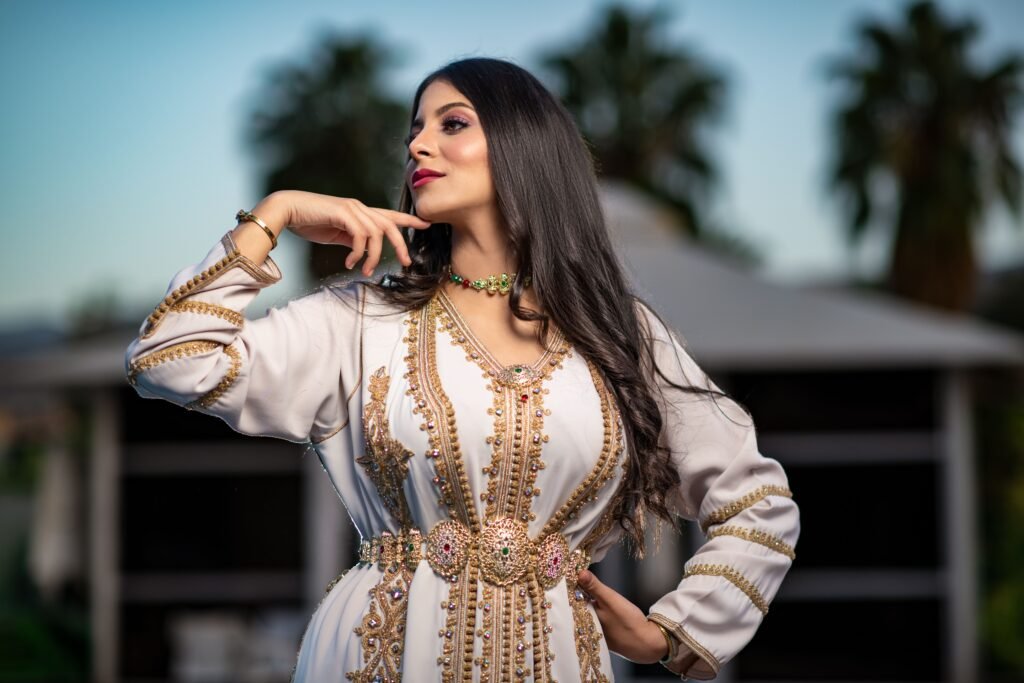
Morocco is relatively flexible in tourist areas, but conservative dress is generally appreciated, particularly around religious sites and traditional neighborhoods.
For the wedding itself, you can choose anything from a conventional Western wedding dress and suit to traditional Moroccan clothing.
A Moroccan-inspired celebration may include:
- Caftan
- Takchita
- Djellaba
- Traditional jewelry
- Babouche slippers
- Moroccan-style accessories
If you want traditional clothing, arrange fittings well in advance. It is also worth scheduling enough time on the wedding day for changing outfits if you plan to wear both Western and Moroccan attire.
Respect Moroccan wedding traditions
Moroccan weddings can be elaborate and deeply connected to family and cultural traditions.
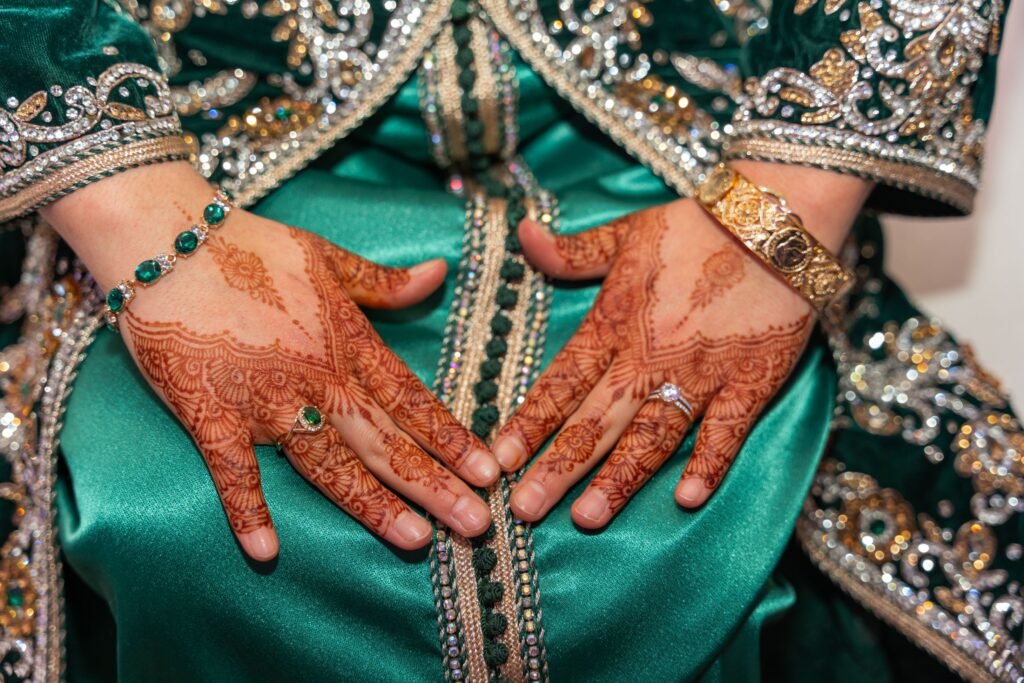
Depending on the family and region, celebrations may include several outfit changes, traditional music, dancing, henna, Moroccan sweets, mint tea, and ceremonial elements.
You do not need to copy every tradition. Instead, choose the elements that are meaningful to you and work with Moroccan professionals who can explain their cultural context.
If you are inviting Moroccan family members, ask them what traditions matter to them. This can prevent awkward misunderstandings and make the celebration feel more authentic.
How to combine your wedding with a Morocco honeymoon
One of the biggest advantages of getting married in Morocco is that the wedding can become part of a larger honeymoon itinerary.
A practical route could look like:
Marrakech → Atlas Mountains → Ait Benhaddou → Dades Valley → Merzouga → Fes
Alternatively, couples who prefer a slower trip could spend several days in Marrakech before traveling to the coast.
For a shorter honeymoon, stay in Marrakech after the wedding and add a private desert excursion. For a longer honeymoon, consider a multi-day private tour that combines cities, mountains, kasbahs, and the Sahara.
Morocco Best Tour offers private and customized journeys, including multi-day tours departing from Marrakech, Fes, Casablanca, Tangier, Errachidia, and Ouarzazate.
A practical 2026 wedding planning timeline
9–12 months before
- Decide whether you want a legal or symbolic ceremony.
- Check eligibility based on nationality and religion.
- Contact your embassy or consulate.
- Contact the Moroccan family court or Adoul if pursuing a legal Moroccan marriage.
- Choose your city and venue.
- Reserve accommodation for key guests.
- Start checking document requirements.
6–9 months before
- Begin document legalization and translation where required.
- Book your photographer and other important suppliers.
- Arrange guest transportation.
- Plan tours and activities.
- Send invitations or save-the-dates.
- Confirm the wedding menu and cultural elements.
3–6 months before
- Recheck all legal documents.
- Confirm the ceremony procedure.
- Finalize guest numbers.
- Confirm airport transfers and accommodation.
- Arrange wedding outfits and fittings.
- Create a detailed itinerary for guests.
1 month before
- Make copies of every important document.
- Confirm all bookings.
- Check weather conditions.
- Confirm transportation times.
- Keep emergency contact details for suppliers and family members.
- Carry important documents in your hand luggage rather than checked baggage.
Legal wedding or symbolic wedding: which is better?
For many international travelers, this is the most important decision.
A legal Moroccan wedding can be meaningful, but it requires careful preparation and compliance with Moroccan law. It may involve court procedures, foreign documents, translations, legalization, medical certificates, and nationality-specific requirements.
A symbolic destination wedding is usually simpler. The couple completes the legal marriage in their home country and then celebrates with a ceremony in Morocco.
The symbolic option can be especially attractive if:
- Both partners are foreign nationals.
- You have a tight travel schedule.
- Your legal documentation is complicated.
- You want a luxury wedding without court procedures.
- You want a traditional Moroccan ceremony while keeping the legal marriage separate.
Whichever option you choose, make the legal status clear to your venue, planner, photographer, and guests.
Practical tips for getting married in Morocco
Do not book the venue before checking legal eligibility. If you need a legal Moroccan marriage, establish the requirements first.
Allow extra time for paperwork. Foreign documents can require authentication, legalization, and translation.
Keep original documents safe. Bring originals plus several copies.
Choose accommodation carefully. If you have many international guests, staying in one area can make transportation much easier.
Build buffer days into your itinerary. Do not schedule your legal appointment immediately before the wedding ceremony or your international flight.
Think about the weather. A beautiful outdoor venue can become uncomfortable if temperatures are unusually high.
Tell your suppliers exactly what you want. “Moroccan wedding” can mean very different things to different people.
Respect local customs. Particularly around religious sites, family traditions, photography, and public behavior.
Consider private transportation. This is particularly useful when traveling with wedding guests or visiting remote areas.
Keep your honeymoon flexible. After a wedding, a slower itinerary with fewer hotel changes is often more enjoyable than trying to see the whole country.
FAQ: Getting Married in Morocco
Can foreigners get married in Morocco?
Foreign nationals can marry in Morocco in certain circumstances, but additional documentation and authorization may be required. Eligibility depends on nationality, religion, marital status, and whether one partner is Moroccan. Confirm the current requirements with the relevant Moroccan authorities before making arrangements.
Can two tourists get legally married in Morocco?
Do not assume that two foreign tourists can simply marry in Morocco. The procedure can be more complicated when neither partner is Moroccan. Check with the Moroccan family court, Adoul, and your embassy or consulate before booking a legal wedding.
Do I need to be Muslim to marry in Morocco?
Not necessarily, but religion can affect eligibility. Moroccan law contains specific rules concerning Muslim and non-Muslim marriages, so couples should confirm their individual situation before planning a legal ceremony.
Is a Moroccan marriage recognized in other countries?
Recognition depends on the country where you live and whether the Moroccan marriage was legally completed according to Moroccan law and satisfies the requirements of your home country. Obtain the official marriage certificate and check the recognition process with your own government.
How far in advance should I plan a Morocco wedding?
For an international destination wedding, starting around 9–12 months in advance is sensible. If you need a legal Moroccan marriage, start the legal research even earlier because document preparation and legalization can take time.
Planning a 2026 wedding in Morocco requires understanding the practicalities. First, decide between a legally recognized Moroccan marriage or a symbolic destination wedding. For a legal marriage, verify eligibility and required documentation with your embassy and Moroccan authorities early. Foreign documents may need authentication, legalization, and Arabic translation, and religious rules can impact eligibility.
Alternatively, a symbolic wedding paired with a private honeymoon is simpler. Marrakech makes a great base, with Agafay, the Atlas Mountains, and the Sahara offering memorable pre- or post-ceremony experiences. By sorting paperwork early, setting realistic travel plans, securing suitable accommodation, and respecting local culture, your wedding can mark the start of an unforgettable Moroccan journey.
Morocco Best Tour can assist with private travel, desert excursions, city visits, and customized transportation for your wedding and honeymoon itinerary.